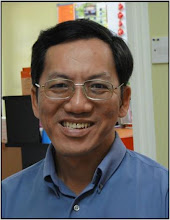
by James Wong
I shared that the final “C” of leadership is culture and together we need to build a church culture that is biblical and progressive using the acronym S.E.R.V.I.C.E. I have covered these: S=Serving Heart, E=Empower Others. For this week I would like to focus on ‘R’ which means, ‘Result-Orientated.’
R = Result Oriented. What does it mean?
Result-oriented culture begins with the end in mind. What do you want to see happening at the end? In management it is known as identifying the Key Result Areas. A country has clearly defined Key Result Areas (KRA). For our country, the Prime Minister announced the 6 key result areas for Malaysia on the 28 July 2009: (1) Reduction of crime rate (2) Combating corruption (3) Widening access to affordable and quality education (4) Raising the living standard of the Poor (5) Improving Infrastructure in rural areas (6) Improving public transport in the Medium term.
Our Key Result Areas refer to the results we want to see happening in this year in the church as a whole. The results that we want will determine our strategy and our focus. Our church programs will be tailored to the results that we want to achieve. By knowing the Key Result Areas we will be able to evaluate our progress. The following are the Key Result Areas we hope to achieve as a church and the details of the action plans are found on pages 6-7 in our Ministry Handbook.
(1) Alpha Outreach (2) Leadership Development (3) Tithing & Offerings (4) IT Networking and (5) Prayer meeting.
A result-oriented culture equates to high performance and achievement. To define performance and establish specific standards of performance in the church is not any easy task. Most people feel uncomfortable when we talk about high performance and high standards as a requirement for those who serve in the ministries of the church. I believe that the Key Result Areas is necessary because we are serving the King of kings and Lord of lords and we should naturally want to give our level best to the task entrusted to us. Taking a passive approach with a lackadaisical attitude can be the easiest and most comfortable approach to church life but in terms of result, it can be discouraging.
A result-oriented mindset always ask the questions, what kind of results we want to see at the end? Every week, we have printed the numerical goals of our church in the bulletin. We hope to see 160 people coming regularly for our Sunday service, 30 people coming for prayer meeting, 40 children in the Sunday School, 8 life groups, 150 members in the BB & GB ministry and 50 members in the G412. What can we do to achieve these goals? Commit to come for Sunday worship? Come to the prayer meeting? Invite someone to church? To achieve new results we need to have new inputs which could be a new strategy, a new habit, a new program, a new schedule or a new commitment. Let us achieve better results for the Lord.
I shared that the final “C” of leadership is culture and together we need to build a church culture that is biblical and progressive using the acronym S.E.R.V.I.C.E. I have covered these: S=Serving Heart, E=Empower Others. For this week I would like to focus on ‘R’ which means, ‘Result-Orientated.’
R = Result Oriented. What does it mean?
Result-oriented culture begins with the end in mind. What do you want to see happening at the end? In management it is known as identifying the Key Result Areas. A country has clearly defined Key Result Areas (KRA). For our country, the Prime Minister announced the 6 key result areas for Malaysia on the 28 July 2009: (1) Reduction of crime rate (2) Combating corruption (3) Widening access to affordable and quality education (4) Raising the living standard of the Poor (5) Improving Infrastructure in rural areas (6) Improving public transport in the Medium term.
Our Key Result Areas refer to the results we want to see happening in this year in the church as a whole. The results that we want will determine our strategy and our focus. Our church programs will be tailored to the results that we want to achieve. By knowing the Key Result Areas we will be able to evaluate our progress. The following are the Key Result Areas we hope to achieve as a church and the details of the action plans are found on pages 6-7 in our Ministry Handbook.
(1) Alpha Outreach (2) Leadership Development (3) Tithing & Offerings (4) IT Networking and (5) Prayer meeting.
A result-oriented culture equates to high performance and achievement. To define performance and establish specific standards of performance in the church is not any easy task. Most people feel uncomfortable when we talk about high performance and high standards as a requirement for those who serve in the ministries of the church. I believe that the Key Result Areas is necessary because we are serving the King of kings and Lord of lords and we should naturally want to give our level best to the task entrusted to us. Taking a passive approach with a lackadaisical attitude can be the easiest and most comfortable approach to church life but in terms of result, it can be discouraging.
A result-oriented mindset always ask the questions, what kind of results we want to see at the end? Every week, we have printed the numerical goals of our church in the bulletin. We hope to see 160 people coming regularly for our Sunday service, 30 people coming for prayer meeting, 40 children in the Sunday School, 8 life groups, 150 members in the BB & GB ministry and 50 members in the G412. What can we do to achieve these goals? Commit to come for Sunday worship? Come to the prayer meeting? Invite someone to church? To achieve new results we need to have new inputs which could be a new strategy, a new habit, a new program, a new schedule or a new commitment. Let us achieve better results for the Lord.